Laboratory "The Strength of Place and the Places of Strength" brings together artists and researchers from UFRJ and Silo's headquarters
16 July - 2026
Between June and July, Silo – Art and Rural Latitude and the Graduate Program in Performing Arts of the Federal University of Rio de Janeiro (PPGAC/UFRJ) held the laboratory The Strength of Place and the Places of Strength, focused on investigating community artistic practices and creation in dialogue with territorial management, understanding it as a living space of relationships, disputes, and imaginations.
The laboratory is part of the postdoctoral research of artist and researcher Cinthia Mendonça, developed at PPGAC/UFRJ under the supervision of professor Eleonora Fabião. As a result of this research on community artistic practices, the laboratory proposes a method that works with conviviality and contagion, opening space for encounters between people from inside and outside the university, from different fields of knowledge and life trajectories.
It starts from the idea that the power of art does not reside only in the outcome of the works, but is built throughout the process through negotiations, encounters, and tensions, mobilizing aesthetic, cultural, biological, and political tools.
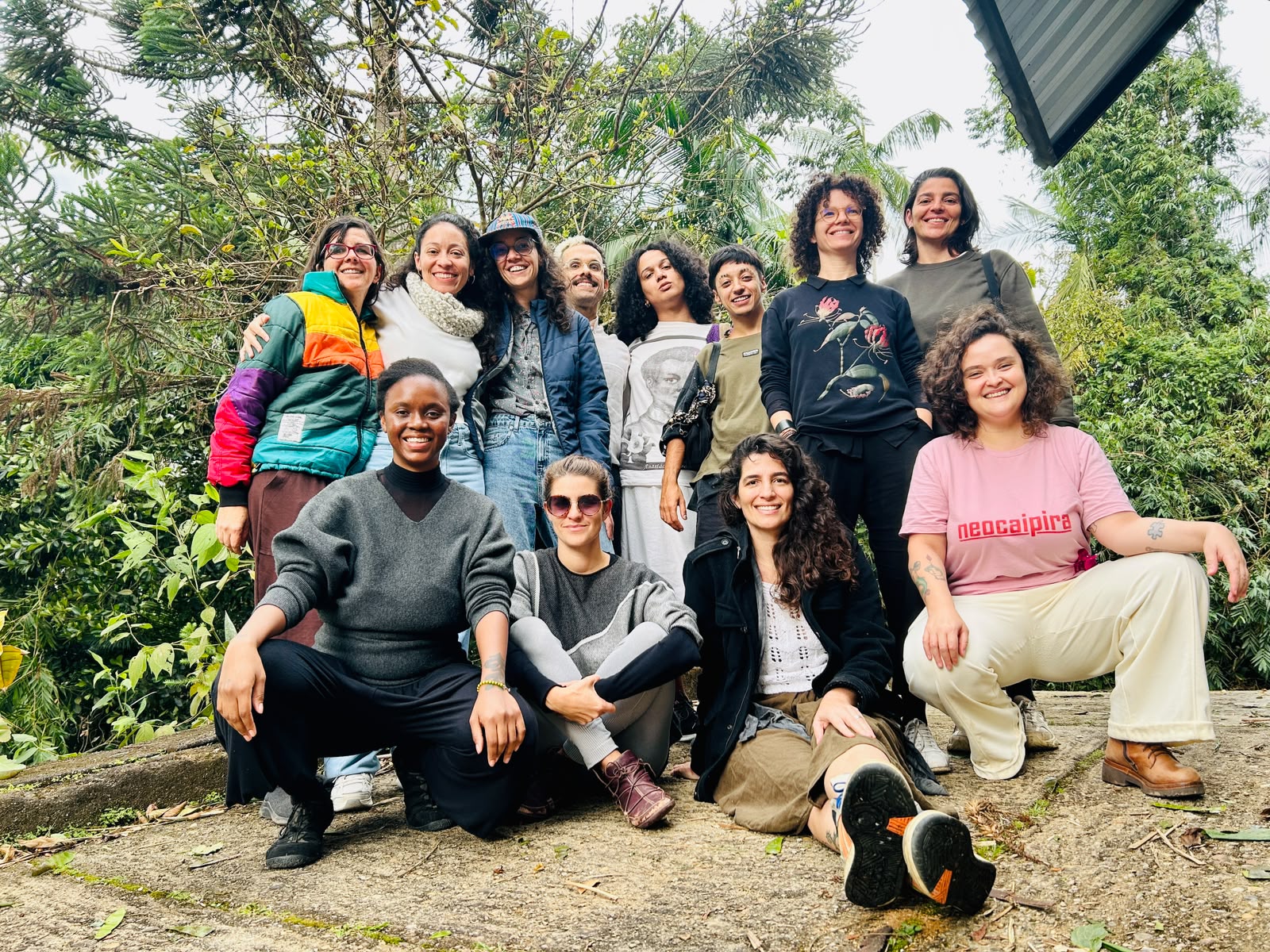
The territory as a space for learning
The journey was organized into two complementary moments.
In the first three sessions, held at the UFRJ School of Communication, the group brought together artists and researchers from different fields of knowledge, with and without academic ties, interested in reflecting on community artistic practices. Throughout the classes, texts, references, and experiences were shared spanning contemporary art, politics, education, geography, science, feminism, and territorial management, understood not as separate fields, but as knowledge that meets in practice.
The second stage took place at Silo – Art and Rural Latitude’s headquarters, in Serrinha do Alambari (RJ), during an artistic residency held over the course of a weekend.
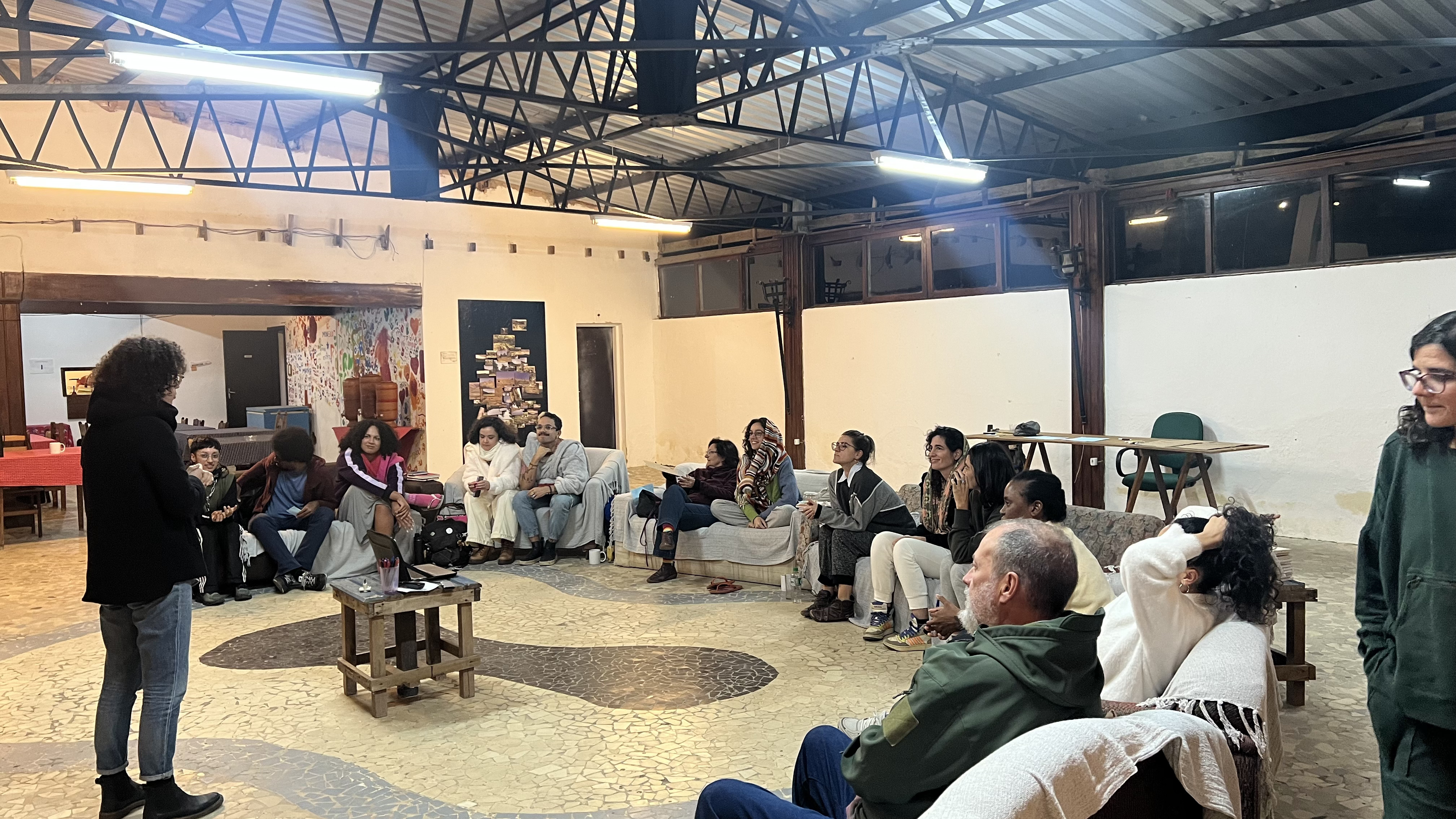
The artistic residency
At Silo, the discussions initiated at the university took on new contours through the experience in the territory.
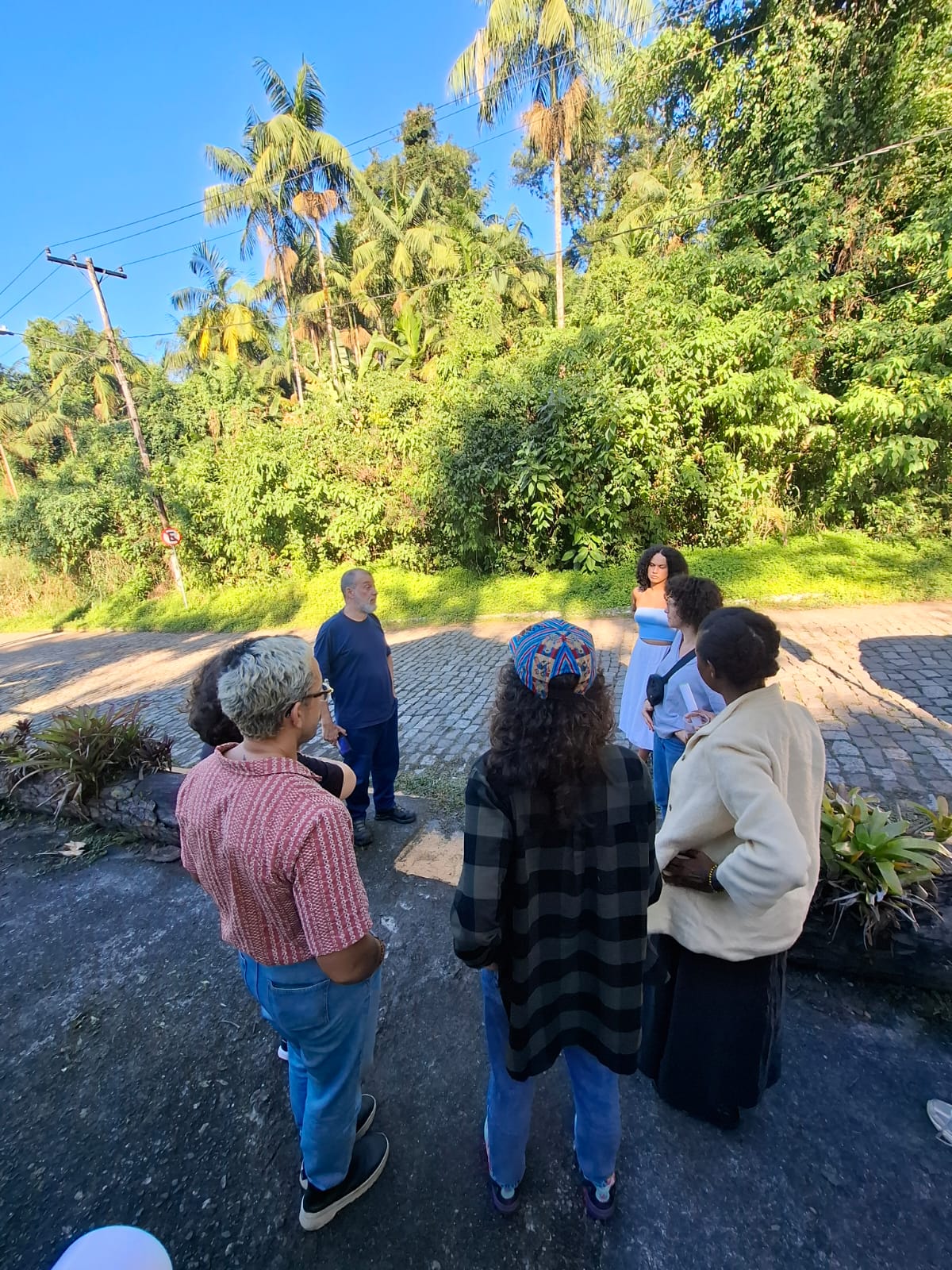
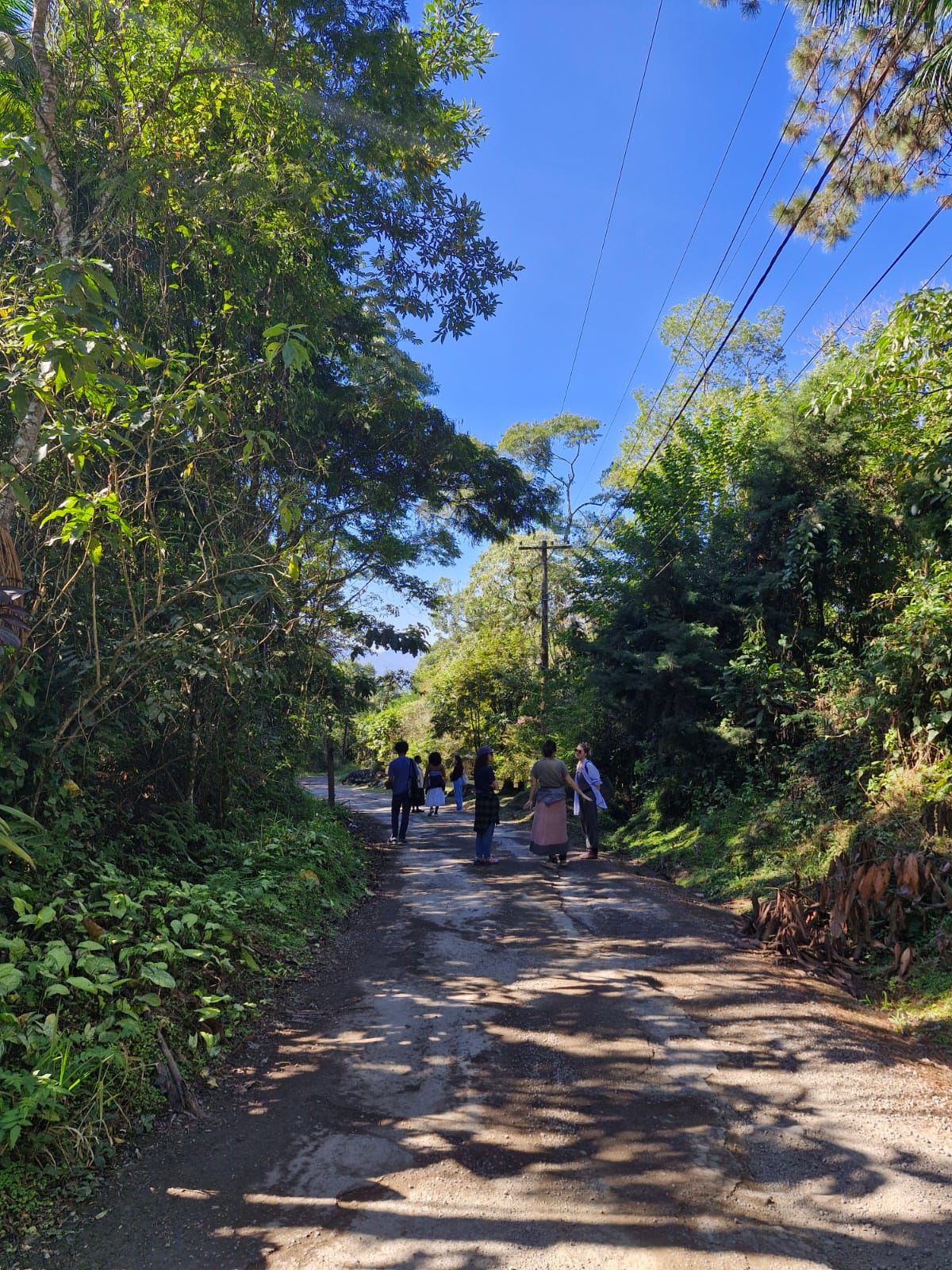
During the artistic residency at Silo, participants were able to experience the daily life of the territory and share their research through individual and collective activities, both inside and outside Silo’s headquarters. They carried out individual and collective activities, walked through the community, went on hikes, and dedicated time to conversations and listening. The experience made it possible to put into practice knowledge built throughout the laboratory, making conviviality, listening, and working together part of the research and creation process itself. As Cinthia Mendonça summarizes:
Once at Silo and in the Serrinha do Alambari community, the group was able to experience firsthand the knowledge brought by the readings and conversations from the first part of the laboratory. Contact with territorial management and conviviality is one of them. The students were able to dedicate themselves to listening, to conversations, and to doing everyday tasks together, thus creating the possibility of cross-pollinating their research with one another.
The time spent at Silo and in the Serrinha do Alambari community allowed the group to experience, in practice, the knowledge brought by the readings and conversations from the first stage of the laboratory. Contact with territorial management and conviviality allowed participants to dedicate themselves to listening, to conversations, and to carrying out everyday tasks together, creating possibilities for cross-pollinating their research with one another. The time spent in the territory allowed for visits, hikes, dialogues, and the experience of the Atlantic Forest and its winter weather.
Expanding repertoires and new perspectives
The closing of the laboratory was marked by the sharing of the processes developed throughout the activities. Participants concluded the journey with advances in their practical and theoretical research, expanding conceptual and aesthetic repertoires, learning new research methodologies, and developing new reflections on their actions in different territories.
The laboratory is part of the Silo Escola program, an initiative dedicated to training, research, and experimentation developed by Silo – Art and Rural Latitude. New editions are planned and will be announced soon.



 CC BY-SA 4.0