LabMARÉ closing — Architecture, Culture and Climate activates proposals for the Maré territory
29 April - 2026
Silo – Art and Rural Latitude and Redes da Maré present the projects of the third edition of LabMARÉ and launch an open-access publication
Silo – Art and Rural Latitude, in partnership with Redes da Maré, held on April 17 the closing seminar of the third edition of LabMARÉ – Laboratory of Architecture, Culture and Climate. The event presented to the public the projects developed throughout the training process, which began in October 2025, and also marked the launch of the publication that brings together reflections, methodologies, and records of this journey.
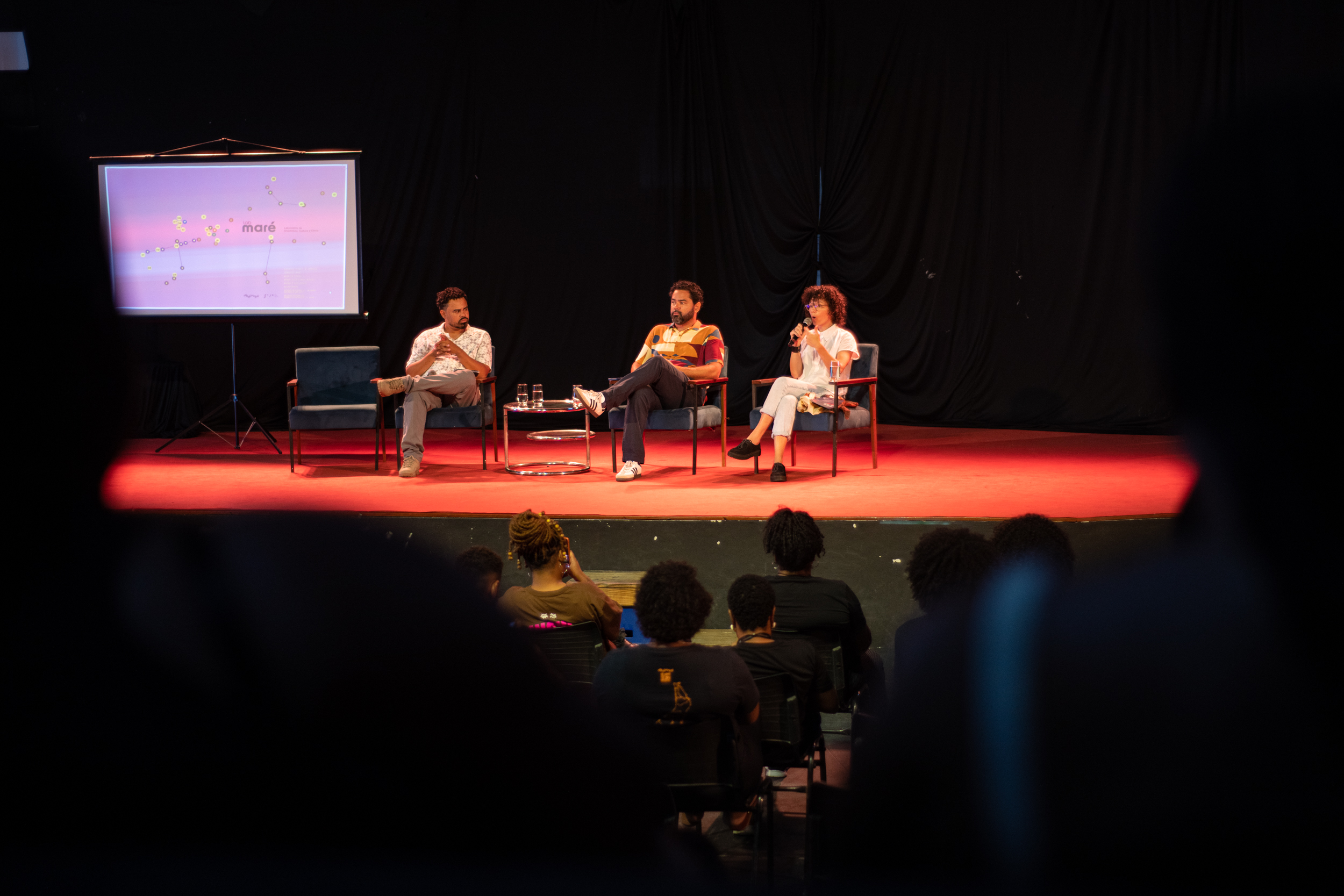 Opening panel of the LabMARÉ – Architecture, Culture and Climate closing seminar, with Cinthia Mendonça, Everton Pereira and Maurício Dutra.
The program was organized around dialogue tables and process-sharing sessions. The opening panel featured Cinthia Mendonça, Everton Pereira and Maurício Dutra, situating the laboratory within the urban and political context of Maré and highlighting the importance of initiatives that connect technical knowledge with territorial expertise. Throughout the seminar, the paths taken, the challenges faced, and the lessons collectively built were presented. The closing also marked the launch of another LabMARÉ publication, available in open access here. The book documents the entire process carried out over the months of work: the eight projects developed, the reflection texts that accompanied the immersions, and an essay written by João Sousa e Silva and Rian de Queiroz, members of the Urban and Socio-Environmental Rights (DUSA) axis of Redes da Maré, which traces the history of Maré’s consolidation alongside the current urban challenges the neighborhood faces.
LabMARÉ – Laboratory of Architecture, Culture and Climate
The publication opens with a text by Cinthia Mendonça, director of Silo, which situates the Lab within a political moment: the arrival of the PAC Periferia Viva program and its urban infrastructure works, and the question that runs through the entire essay: why do peripheral neighborhoods accumulate basic architecture and urbanism problems that Rio’s south zone has never had to face? The text also presents the methodology of collaborative laboratories and defends citizen participation as a prerequisite for any real transformation in the territory. The full reading is available at the Library.
The material presents the laboratory’s journey from the perspective of those who live in Maré: young people, residents, students, and workers who think about the territory from their own experiences. The proposals address issues such as safety, mobility, leisure, and environmental quality, proposing new ways of occupying and transforming squares and public spaces.
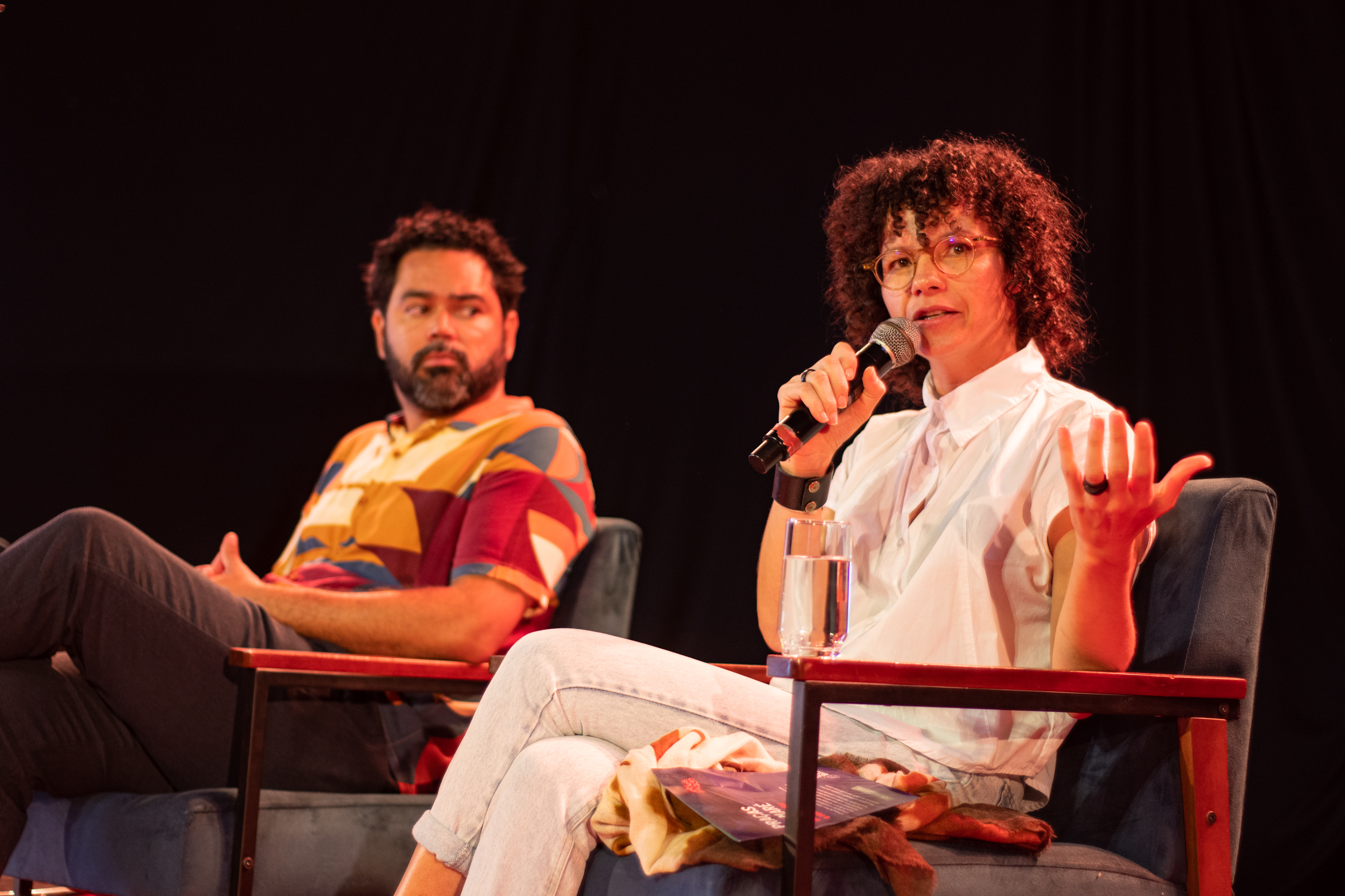 Publication of the third edition of LabMARÉ – Architecture, Culture and Climate, available in open access.
Three editions, one methodology
This was the third edition of LabMARÉ, an initiative of Redes da Maré in partnership with Silo – Art and Rural Latitude. The first edition, held between July 2024 and February 2025, was dedicated to Community Leadership and Practices. The second, between August and September 2025, addressed Science Communication and Popularization. LabMARÉ was the first experimentation and innovation laboratory held inside a favela. The methodology applied has been developed by Silo for over 15 years in the Ibero-American context, based on a model originated at MediaLab Prado in Madrid in 2005 and adapted by Cinthia Mendonça for the Latin American reality. It proposes a horizontal learning environment that overcomes the hierarchical logic between those who teach and those who learn, valuing territorial knowledge, active listening, and collective creation in open space.
Three principles guided this edition. The first is diversity and horizontality: people of different ages, races, genders, knowledge, and practices worked together, without hierarchy between those who teach and those who learn. The second is active listening and valuing the territory: residents’ knowledge was treated as legitimate, as relevant as any technical or scientific data, and the street was the main space for coexistence and research. The third is autonomy and the common good: groups self-organized with support from specialized mentors, developing solutions driven not by individual interest, but by the collective improvement of the neighborhood.
In practice, this translated into six in-person immersions on Saturdays, on-site prototyping, thematic mentoring sessions, and a community fund to provide financial support to selected teams. Everything was documented and made available in open access at the end of the process.
A model that unfolds across other territories
The LabMARÉ experience reveals the potential of collaborative laboratories as a strategy for addressing urban challenges through participatory processes. Silo provides consultancy in the planning, development, and implementation of laboratories, supporting organizations and collectives from conception through to the prototyping of solutions.
This approach integrates popular and scientific knowledge, values local agency, and builds learning environments based on listening, collaboration, and experimentation. What happens when different people begin building solutions together for the territory they inhabit? What transformations become possible when knowledge stops being vertical and starts being shared?
Organizations, collectives, and institutions interested in developing collaborative laboratories are welcome to reach out at contato@silo.org.br.



 CC BY-SA 4.0